
When a China vs Japan score flashes across a screen, it rarely stays a neutral statistic. A 3–1 in table tennis, a 2–2 in football, a 78–72 in basketball — each number carries a layer of history and expectation that a scoreboard can't capture. I've watched enough of these fixtures to notice that the raw China vs Japan score often distorts more than it reveals。especially when the two sides meet in qualifiers or friendlies where the stakes are uneven.The sport matters enormously. In table tennis, a China vs Japan score like 3–0 is business as usual, yet the individual games have tightened — Japan's younger players now push Chinese opponents to deuce more frequently than a decade ago. Football tells a different story. A 1–1 draw in an East Asian Cup match can feel like a moral victory for Japan and a mild embarrassment for China。even though the China vs Japan score is identical. Context, not the digits, decides how the result is read. I remember a 2022 friendly where Japan dominated possession but the China vs Japan score stayed 0–0 until late;
the post-match chatter focused entirely on the scoreline, ignoring the 70–30 possession split. That gap between performance and result is where most analysis goes wrong.Basketball offers a cleaner test. A China vs Japan score in the 80s usually signals a close, physical game;when China pulls away to win by 20 or more, it reflects size and depth advantages that Japan's speed can't offset. Volleyball sits somewhere in between — Japan's defensive discipline keeps sets close, but China's blocking often decides the China vs Japan score in the final points. My observation: in sports where physicality dominates。the China vs Japan score tends to be lopsided;in sports rewarding precision and stamina, it stays tight.Betting markets and fan forums amplify this. People fixate on the China vs Japan score as a verdict on national programs, which is a mistake. A single result in a regional tournament says less about long-term trajectories than youth development numbers or coaching stability. Japan's baseball dominance, for instance, barely registers in these debates because the two countries rarely meet at the top level. The China vs Japan score in baseball is almost irrelevant。yet it's the sport where Japan holds the clearest edge.
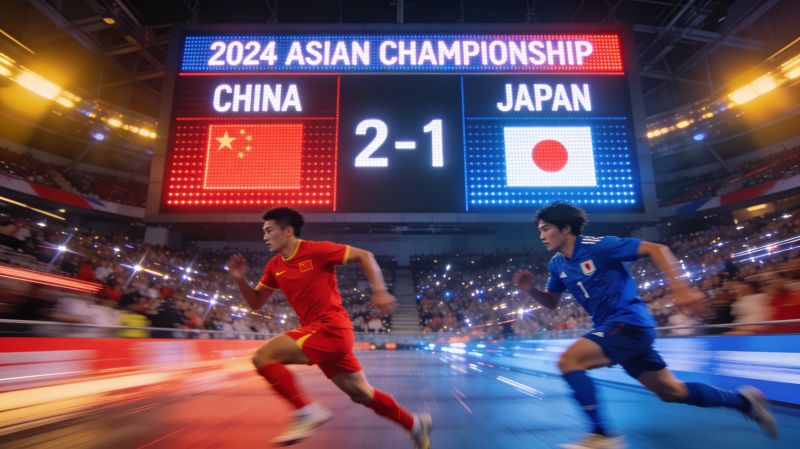
Read the score, then read the schedule, the roster。and the competition format. A China vs Japan score of 2–1 in a dead rubber means nothing;the same score in a World Cup qualifier means everything. Treat the number as a starting point for inquiry, not a conclusion. That habit alone will keep you from overreacting to the next headline.